So far the weather has been fairly kind for the groups of volunteers who have been working so hard , mainly at the Rectory Road fields. Great fun and enthusiasm from all ages and backgrounds and it a real pleasure to welcome so many new faces…..and, of course, thanks again for the many ‘old’ faces that seem to come regularly come rain or shine and have been seen wet, muddy, tired but still smiling…good on you all, and thank you
Lots still to plant so please tell your friends and probably the easiest way to get involved is to log on to the Thames 21 site where you will see the dates, directions of how to get to our planting days (and at other locations too) and much more information https://www.thames21.org.uk/get-involved-2/
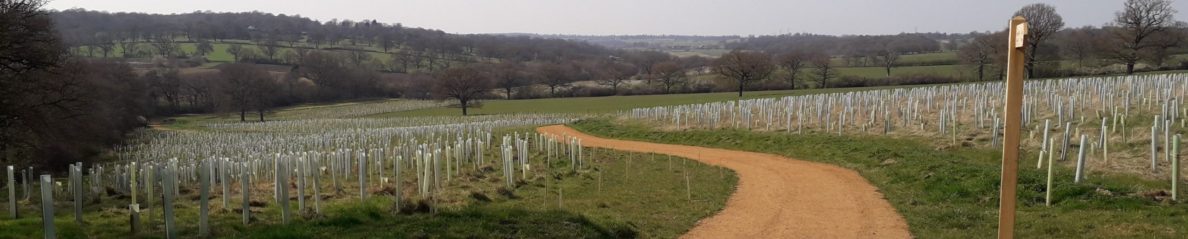
These current planting fields are protected by deer-proof fencing so the whips (small saplings) get a chance to mature. This means that once we have dug them in they only need a small bamboo cane to show where they are.
(On a personal note this means that once a whole field is planted there is not a lot to show for all our hard work…I did suggest flourescent day-glo paint on the sticks but this idea went down like a lead balloon)
These shots are from Rectory Road on January 31st ’23
and these are again at Rectory Road on 3rd February 2023
The plan shows the different tree planting densities
10th February 2023 # Rectory Road
The long canes are distance markers. Some areas are high density planting and some low density. The sticks are marked accordingly. Despite appearances…it is all well planned..
I love the shot of Lucy ‘in the bucket’ at the end of the day
This is at Rectory Road Farm on the 15th February
…So great to see the youngsters helping. We always find they really enjoy the challenge
17th February …gales and snow in Scotland today but we had some great sunshine (ok, if I am being honest…yes there were some clouds too)
This time we enjoyed the great help offered by Martin’s great scouts who did a fantastic job of planting and will be able to tell their families in years to come that they actually planted this forest….. well done folk…tell your friends …we need a lot more help..Loads of trees still to be planted
refocus_ok
It is such a great opportunity for young people to be involved in community projects like this We speak to some youngsters who are amazed at the size of the fields and have never been in the ‘countryside’ before. Hard to believe but this project is open and available for all so we do encourage anyone reading this to join us and be part of the greatest new woodland creation project for London .
The shots of the ‘kids’ enjoying their break after a morning planting says it all. Well done and thank you all
A few of us walked a 5 mile leisurely ramble admiring the new plantings and enjoying the sunny crisp day. Frost-covered leaves and cobwebs seemed to take on a new beauty and we were delighted to pass many folks (some with dogs) all passing the time of day and delighted to have ‘found’ this wonderful new series of footpaths
October 18th 2022…A really unexpectedly hot day saw a group of volunteers in Oakwood Park prepared to plant a great selection of water habitat plants in the upper of the five ponds created in the park. It is a major brave undertaking with five quite large ponds and several small swales (scrapes) interlaced via gullies that meander downwards from the top of the park.
Many dog walkers and locals seemed to be unaware of these developments and were really interested in what was taking place and we had an opportunity to discuss this with them.
Admittedly the area possibly looked at its worst during this early stage but once the water enters the top pond, it will slowly fill and when it reaches the top of each pond it is planned that it will then overflow into the gullies which then meander attractively down the slope via all the lower swales and ponds slowly filling each as ithe weather dictates
This is a well planned and large undertaking. A concern expressed was that it was now quite muddy and looks unattractive in what was a previously natural area. However, when the whole concept was explained (with the added benefit of the great weather) the concerned folk were able to envisage the planned beauty with water fringed with plants and teeming with wildlife.
Prior to this scheme polluted water with run offs from local streets caused many problem floods downstream and the benefit of flood prevention plus the importance of the whole scheme naturely filtering the potentially polluted water was an important consideration.
Many Friends of Enfield Chase work with other volunteers on local projects and this is the final week of regular events. Yes, the project in it’s current form comes to a close. There were special thanks to ALL who have participated, helped the borough, had a bit of fun, and maybe even learned a bit from Gareth, Angus, Sam, and Digby at Thames21 andThe Waterways Team of Enfield Borough Council, who enabled this involvement and continue to improve the environment,…for us all.
Lots of fascinating work is currently being planned…so ‘watch this space’
Thames21 is working with Enfield Council and the community to restore the borough’s rivers. They are doing this by working together to create new woodlands and wetlands and by providing exciting volunteering opportunities out in nature.
The middle pond showing the overflow pipe from the pond above via connecting gully
One of the meandering gullies between the ponds and swales
Before planting began..this will slowly fill with water
At the start of the day…All the equipment unloaded and the plants ready for planting
at the start of the day..all equipment and plants unloaded
A safety briefing and then donning heavy duty wellies and hi-vis gillets we were shown the plants and had the various water preferences explained together with an explanation of the best areas to plant them. Armed with dibbers and waterproof gloves we entered the heavy mud of the ponds.
It was quite a strenuous excercise but we covered the whole upper large pond in a remarkably short time. Ten of us planted over 1400 plants during the day…
The planting information briefingThese little plugs don’t look much, but will form a good root mass and really go to work in filtering any pollutants out of the water with the added benefit of enhancing the beauty of the water.Yes, it was mighty muddy and our boots soon elevated us by several inches.
Taking photos ‘before’ and after’ was not totally satisfying as the ‘after’ pictures (due to the very small size of the plugs) did not really show the result of all our hard work but like our tree-planting everyone will enjoy the results in years to come.
…hard to see any of the tiny plugs..but, honestly, they are there..!!
That sarnie and coffee break was really welcome during the day Enjoying being out in the open in this great environment and hoping to leave a legacy for future generations
After heavy rain for the best part of a week we went back and were delighted to see the cell (pond) level had risen considerably so our newly planted plants will have a good chance of survival this time (see below)
Quite a difference, after just one week
Don’t forget we are active throughout the year and welcome any help. All ages are welcome and we are are in the process of involving local schools and youth groups in our future plantings and maintenance. This will benefit everyone by becoming an integral part of the community, learning about nature, enjoying this wonderful environment and being part of the whole new green ethos from a practical as well as a theoretical viewpoint. Many volunteers are conservationists, many work in the community in other fields and many are just willing to be part of a bigger concept…let us add you to this ‘merry bunch’…Seriously though, we look forward to a really big influx of volunteers for the coming season..thanks so much for reading this and we hope you are inspired..
Some of the planted areas did not do too well with the drought probably being the main cause for concern.
One of the large areas had been identified as particularly in need of checking and a few of us met to mark survivors.
The weather was great so armed with aerosols we divided up this planted area and fought our way through the weeds (thinking that maybe they also contributed to the failure rate)
Weeds nearly as tall as the plantings.The tree protectors were marked with white aerosols indicating survivors
…some unexpected finds were small field mice nesting in their protected new homes
A large number of ‘failures’ were evident at the close of our session but we were surprised to find no common denominator…. some varieties had done well and also some areas had done well, but these were interlaced with the failures.
This holly was looking great but others were not so ‘happy’This shows the total planted area. Many areas were already covered with whips bursting out of ther protectors…A coffee break was enjoyed (despite the dismal expressions) at the end of the session.
…what we find so encouraging is the number of people who have now heard of this great area and have already enjoyed it or who fully intend to take dogs/children etc along in the very near future.
JOIN US……
The time is rapidly approaching now when our new preparation and planting programme will commence and we welcome all ages to join us in continuing in developing a whole new forest and parkland. We will join with groups to work at all levels ensuring suitablity of tasks…it should be fun and not tiring physical labour and many new friendships develop from being community-minded and with the overiding aim to leave this unique and wonderful heritage for future generations
Many folk we meet across Enfield Chase are fascinated by the large tree planting areas and usually the first question is “What varieties of trees have you planted here”
A very useful leaflet was given out to many of the walkers at our inaugural walk but in case you did not receive one we have shown the project overview here.
The restoration of Enfield Chase was led by Enfield Council with the aim of creating a publicly accessible sustainable broad-leaf woodland
This will provide natural flood prevention, benefit wildlife (as can already be seen) and having the added advantage of improving access within the greenbelt of London
There are 100% native UK species and we have planted to date over 100,000 trees covering over 60 hectares.
Volunteers like ‘Friendsofenfieldchase.org.uk’ were instrumental in this well co-ordinated and well planned planting.
We must thank Enfield Council, The Forestry Commission, Thames 21, Mayor of London and Climate Action Enfield for all their forethought, cooperation and dedication to what will become a marvellous heritage for future generations.
The new grant (see the information here on our website) will enable more planting and to attend to some of the failures caused by the drought. As “Friendsofenfieldchase.org.uk” we welcome people of all ages to join us. There is always a lot of fascinating schedules planned and commitment can be very basic but everyone is promised a great deal of fresh air, bonhomie, muddy shoes…and lots of smiles…with the bonus of contributing to a green future for future generations.
Here is a brief description of 16 varieties planted plus a note at the end of a further 15 varieties we have planted.
Illustrations of the species are by Anna Darley
PEDUNCULATE OAKHAZELHORNBEAMBEECHASPENCOMMON ALDERWILD CHERRYSILVER BIRCHHAWTHORNSCOTS PINE
BLACKTHORN
SLOE GINDOGWOODBLACK POPLARCRAB APPLEGOAT WILLOWHOLLYSome of the other tree species we have helped in planting in The Enfield Chase include:
Small leaved lime
Sycamore
Norway Spruce
Red Alder
Grey Alder
Wych Elm
Downy Birch
Elder
Spindle
Buckthorn
White Willow
Crack Willow
Grey Sallow
Gelder Rose
Osier
This information is intended as a guide, and we do hope it adds to your enjoyment of the Enfield Chase.
Do join us in maintaining a wonderful new woodland and beautiful countryside for all to enjoy
A warm quite sunny day in early October ’22 at Rectory Road Farm was the scene of some restorative planting around the edges of some of the scrapes, swales and ponds that had dried out (badly in some cases).
The bamboo sticks indicate where the new whips have been planted
A selection of indigenous plants, including the beautifully scented water mint, were planted.
A few of the water margin plants
Rocky our faithful inspector checked the condition (by treading on them in some cases)
‘Rocky’ – The Guvnor doing his quality control
Once his tail wagged we knew we were ok to start.
Many were planted below the water line so at the end of the day there was not a lot to show for all our work.
This water in this scrape had reduced considerably and obviously looks sad at the present time
We ended up very, very muddy but happy in the knowledge that in the future the water will attract more wildlife and look much more natural and be a great feature in that field.
Instructions indicating the sensible planting depth for each plant varietyBefore we were totally covered in mudYes, currently it is little more than a puddle..but watch this spot for drastic changes
We are delighted to repost the following article which appeared in the well-informed Enfield Dispatch at the end of September 2022
Enfield Council wins £500k funding for rewilding Enfield Chase
New ponds have been created as part of Enfield Chase Restoration Project and could be replicated elsewhere
Enfield Council has been awarded £500,000 in government funding to help restore natural habitats around its newly-planted woodland in Enfield Chase.
The government named Enfield Chase as one of 22 landscape recovery schemes it would be supported to help restore lost biodiversity across England.
The £1.3million Enfield Chase Restoration Project was originally launched approximately two years ago with the aim of planting 100,000 trees along a corridor of land between Trent Park and Clay Hill details of which can be seen on our website. an area which once formed part of the historic Enfield Chase royal hunting ground but had been heavily deforested after the 18th Century.
The project later was given the ‘Trees and Water Award’ at a ceremony organised by the Forestry Commission, supported by the Mayor of London in March ’22. from the Forestry Commission.
Now the initial planting phase is complete, the new funding will help the council develop plans for restoring other areas of Enfield Chase, with a focus on restoring the natural courses and conditions of streams; reconnecting these streams with floodplains; creating a “mosaic of habitats”; restoring wetlands; and creating and improving woodland.
Although the government grant will not itself pay for the physical work involved, it will allow the council to develop a wider plan for Enfield Chase and engage with stakeholders.
A council spokesperson said: “We will be working with partners including Thames21 to carry out surveys and identify the best way to carry out the project – maximising outcomes for people and wildlife, access and biodiversity, social and environmental benefits, with a focus on water – i.e. river restoration, wetlands, natural flood management.”
John Cole, from the Friends of Enfield Chase voluntary group, told the Dispatch: “We are really excited about the possibilities but we realise there is a lot more work to be done to take it forward.”
The well-advertised inaugural ‘Friends of Enfield Chase” walk hopes to introduce many people to the pleasures of walking in a such a beautiful area and involve them in new plating and tree and water maintenance
Separately, the council has confirmed that funding has been made available for the planting of between 30,000 and 40,000 trees next year, as an expansion to the initial planting of 1000,00 planted at Enfield Chase since 2020
Thorns and holly were considered so important to the regeneration of trees that in 1768 a statute was established imposing three months forced labour on anyone found damaging them starting each month with a number of lashes of the whip.
Because scrub is habitat on the move. It is difficult to define and has, for centuries, been regarded as an enemy. However, tolerance towards thorny scrub actually protect whips and obviates the use of carbon-intensive polypropylene cylinders attached to wooden stakes with plastic ties..a financial and environmental cost and heavily labour intensive.
It has been noted that most tree guards are not exposed to enough sunlight to degrade.
Officers from the Woodland Trust demonstrated at Knepp that thorny shrubs provide the best protection and growing environment for saplings….as well as the variety of species spontaneously establishing themselves-including wild service and crab apples.
Maybe it should be noted that charities rely on grant aid to plant woodland.
Coppicing
Coppicing, where trees were regularly felled to near ground level allow shoots known as ‘spring wood’ regrow from the stump was traditionally used for tracks and for fuel for the iron industry and also has the added benefit of prolonging the trees’ life.
Interestingly, a lime still regularly coppiced is thought to be thousands of years old.
Mixed coppice is the most biodiverse and coppicing intervals vary according to species but many trees may have been coppiced seventy or more times in their history.
Increased food production facts
The notion that every inch of our land must be worked for our survival is highly emotive:
The prediction of world population increase is from 7 billion currently to 10 billion by 2050.
The required increase in global food production is said to be 70-100%.
Vested interests do not show farmers being forced out of business by low commodity prices resulting from subsidies and overproduction.
The reality is that the world already produces enough to feed 10 billion people and one third (1.3 billion tonnes) is wasted annually
According to the UN Food and Agricultural Organisation industrialised nations annually waste 670 million tons of perfectly edible food.
As a local example, even Tesco admits to have thrown away 50,000 tons from their UK stores.. Multiply that up globally.
Restaurants routinely waste food by over ordering and us, the public,
demand ‘perfect’ food….straight carrots, blemish-free apples etc and then in rich countries we throw away 222 million tonnes annually.
We overbuy and are not taught how to cook leftovers,
A startling statistic is that in the UK, 15 million tonnes of food was wasted in 2013 of which 7 million tonnes was wasted by households.
Bear in mind the epidemic of obesity and associated illnesses.
Food losses in developing countries are also far too high but are caused by poor distribution infrastructure, lack of refrigeration, communication, transportation and hunger rather than obesity which is the overriding problem here.
The food and farming industry is reluctant to resolve the issue of waste for commercial reasons
40% of US maize is used to feed cars
It is estimated that by 2021 14% of world’s maize, 16% of its vegetable oil and 34% of its sugar cane will be burned as fuel.
I am not being ironic when I say “food for thought”
Rewilding may not look always look attractive but maybe we should rethink our attitudes.
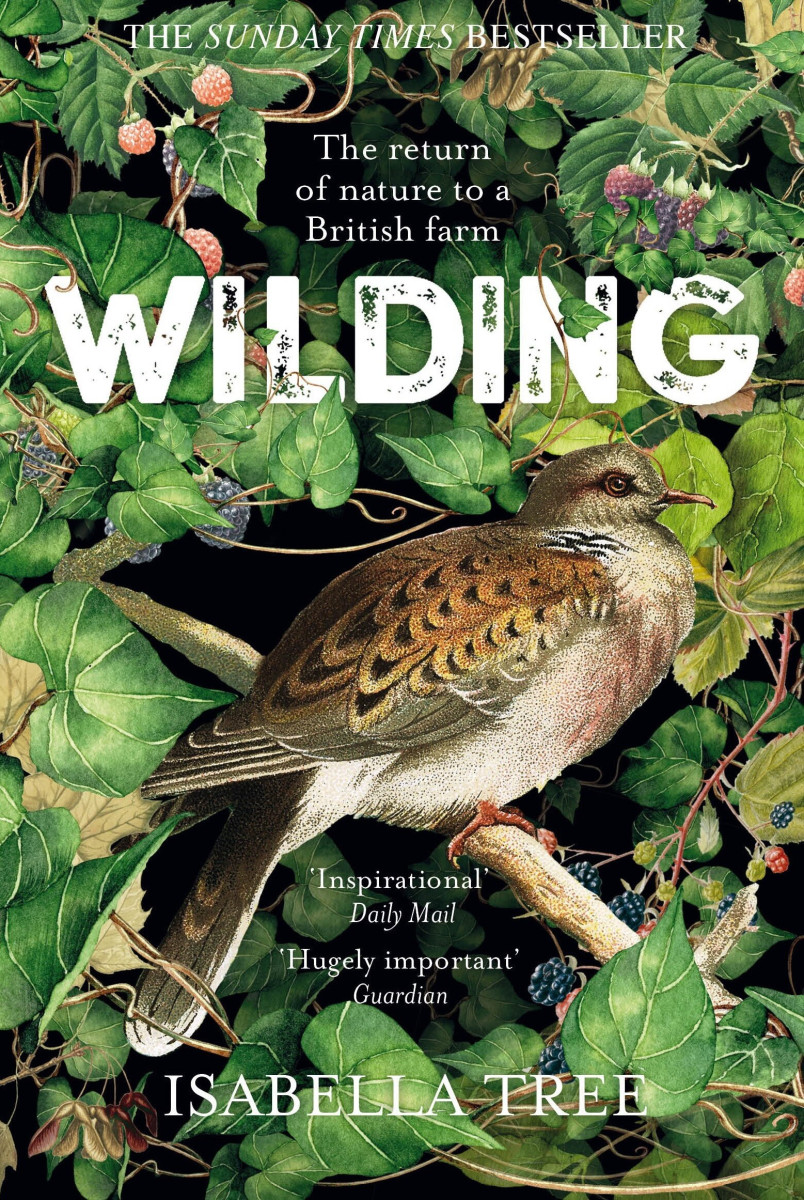
Much of this information is taken from ‘Wilding’ by Isabella Tree – The true story of the return of nature to a British farm.
INAUGURAL WALK….Our inaugural leisurely stroll took place on Saturday October 1st along the wonderful new Enfield Chase section of London’s orbital pathway: The London Loop.
We were delighted to see so many new faces joining us and we do hope that you join us again and also tell your friends and help us introducing this area to many new people
This is Enfield’s newest park area and London’s newest woodland. We saw the wonderful reforestation and rewilding project that was a project initially led by Enfield Council, supported by Thames 21 and 1000’s of volunteers.
We chatted and relaxed in the brilliant sunshine and discussed tree planting, maintenance and our exciting future plans.
Wildlife was spotted all around us in the fields, in Salmon’s Brook (which is now showing signs of re-filling) and ponds and swales. Even dragonflies were darting around.
Birdwatchers in our party saw red kites, kestrel and meadow pipit (the latter two on the track to Rectory Farm) and in the sky above and in the new woodland.
Red KitePippit
Many walkers who joined us were amazed at the wonderful unspolit countryside right on our doorstep. The large horizons with beautiful clouds completed the picture
Tree identification handouts were handed out and hopefully will be useful as the whips mature.
John stood below the Viaduct and unvieled to us all a host of fascinating information about its inception, building and history even explaing about its size reduction!
Rendlesham Viaduct (also known locally as Fourteen Arches)
I was reminded of earlier days when we clambered up …put pennies on the line and retrieved them flattened . Please don’t tell my mum!! (DO NOT TRY THIS…we were very young and extremely foolish)
Before it was flattened…
(All walkers received a unique wild seed packet beautifully designed by our Alison and we look forward to seeing photos of the results at a future time
Alison’s beautiful design for the wild seed packets (will this become a collectors item?)Birdwatchers’ and photographers’ paradise
We feel that everyone enjoyed it and we hope that you will want to become involved with the Friends Of Enfield Chase. We meet a few times a year to plan and there are really great voluteering opportunities for everyone throughout the year.
(Currently they are on Wednesdays but subject to change. Our tree planting will continue during the coming winter months.)
A moment to relax
You can benefit in so many ways: being in the fresh air…in a very special environment…meeting like-minded people and being able to contribute to a wonderful legacy for future generations.
Contact us if you require any further information and also join us on Whatsapp and Facebook
Many folk are fascinated by the large swathes of delightful countryside so close to the metropolis and are keen to know its origins so here is a ‘very’ potted background which we hope you will find interesting. It is gleaned from many sources and apologies if you spot any mistakes.
A short history of Enfield Chase
A ‘Chase’ is a type of royal hunting forest and Enfield Chase is the only chase in London and the South East. Even in The Domesday Book in 1086 there is a rare reference to Enfield as a ‘park’ which was then the term for a game enclosure.
In 1676 it was noted that over the previous 700 years Enfield Chase had no inhabitants or habitations (other than three hunting lodges). It was greatly favoured as a royal hunting forest owned by the royal Duchy of Lancaster. Royalty seemed to have spent much of their time in hunting
Before 1777 the only road through the Chase was Enfield Road (Then called Merryhills Lane) Stebbyngs Brook (as Salmon’s Brook was called in Tudor times), was apparently crossed by an unsafe bridge and the whole area was a quagmire in winter. The area by the Merryhills Pub is still known as Frog’s Bottom
Elsyng Palace, nowadays, frequently shows itself.
A fascinating discovery at Elsyng Palace
This is due to the hard excavation work done by volunteers of The Enfield Archaeological Society every year as they uncover more and more of the foundations of this former large palace close to Forty Hall. They then have to re-cover their excavations after their work.
Hard work uncovering some fascinating history
Elsyng Palace was demolished in 1656
An artists impression of how Elsyng Palace might have lookedd
but the fishponds remain and are still a popular fishing spot.
One of the attractive fishponds at Forty Hall (Still used for fishing)
Henry VIII bought Elsyng Palace (which was expanded from a 15C manor house ) for its easy access to the hunting in Enfield Chase.
An historic survey showed that the southgate of the chase is where Southgate tube station is now situated.
Bunker’s Corner in the 1880’s. The wheelwright’s premises were demolished in 1897 to make room for some new shops but is now the site of Southgate Underground Station
The Site of Southgate Underground Station
After the division of The Chase in 1777 development initially was very limited with small-scale encroachment at Southgate and other settlements on the periphery.
A fascination look at the past…(in 1930)
Highlands Village was constructed on the sites of Highlands and South Lodge Hospitals which were on adjoining sites and prior to that Highlands Hospital was The Northern Isolation Hospital for tuberculosis.
Highlands Hospital
In the 1930’s the Piccadilly line was opened with large scale suburban development taking place at Oakwood (formerly known as Enfield West) and Southgate and Cockfosters
In 1936/7 Middlesex County Council purchased around 4000 acres for inclusion in the Enfield Green Belt just in time to save the remnants of the Enfield Chase. This is now admirably protected by law and residents alike, and The Enfield Society. However it is under constant pressure for development
Further Reading: see the full digitalised eition of David Pam’s book: The Story of Enfield Chase, published by The Enfield Preservation Society in 1968 (Hard copies still available on line)
The whole scheme has much wider implications than is shown here. Hopefully this background will encourage readers to enjoy the beauty of the Enfield Chase and not allow any future inroads into this wonderful area. By enjoying it and preserving it we provide a wonderful legacy for future generations.
CLIMATE EMERGENCY MEASURES
Enfield Council has declared a climate emergency with a pledge to become carbon neutral by 2030.
These first 100,000 new trees planted across 40.47 hectares of council-owned land in Enfield Chase. (this is equivalent to 61 football pitches) and will help to reduce the amount of the harmful greenhouse gas, carbon dioxide in our atmosphere. This woodland creation scheme will significantly increase the number of trees in the borough and alongside flood management features like ponds, wetlands and swales.
Swales are a means of stopping water runoff, especially from roads and hard surfaces, and putting it to use rather than having it drain away. They are effective at removing polluting suspended solids through filtration and sedimentation. The vegetation (much of which is painstakingly planted by the volunteers) traps organic and mineral particles that are then incorporated into the soil, while the vegetation takes up any nutrients.
The swales are maintained by removing sediment and debris from in and around the swale. Weeds and plants that do not belong are also removed. Obstruction or blockage of flow along inflow areas or pipes, including trash, debris, or sediment are carefuly checked
Channel clearing in November 2021
This enhances biodiversity and providing habitats for birds and other animals. As well as using natural processes and planting and rewilding to reduce risk of flooding, the new trees will stabilise the soils, preventing their erosion, with benefits felt as far away as the Olympic Park. The project also creates a series of mini-wetlands which will help prevent pollution from reaching the river.
This new woodland will enhance nature’s beauty for communities across Enfield as a place to enjoy for generations to come. It will be composed of mixed native species, predominantly broadleaf with some woody shrub, conifers and riparian species where appropriate.
Rectory Road Tree planting in November 2021 as the whips are carefully taken to the planting areas
(A tree identification/info guide will be added to our website shortly) A core of productive species will provide long-term sustainability. Species mix and layout will aim to look and feel natural – avoiding grid planting and softening edges with mixed species. Planting densities are varied with lower concentrations of planting in the vicinity of footpaths, other amenity spaces and woodland edges
Enfield Council’s Climate Action Plan envisages creating 140 hectares of new trees by 2025
The open character of the Salmons Brook valley will be retained by incorporating natural flood management features like ponds and wetlands, and allocating some areas of natural regeneration. During very dry periods some of these may dry out but rapidly refill over time.
One of the swales partially dried out during the drought period but will rapidly refill with rainwater again
The historic context of the area will be preserved and a brief history is attached here.
Key views will be identified and protected. Space for amenity features such as footpaths, glades and picnic areas will be incorporated.
A rest break during the tree survival checks in August 2022
The London Loop (“The 150 mile long “M25 for walkers” ) within Enfield has been upgraded to provide a more accessible path which can support wheeled traffic such as cyclists, prams and wheelchairs eventually connecting Trent Park to Forty Hall.
The help of Thames21 and Enfield Council mobilised communities, stakeholders and volunteers to help shape the new woodland and introduce jobs and training opportunities. The first phase of planting began in November 2020.
Volunteering Thames 21, working with Enfield Council and the team of loyal volunteers* created London’s largest woodland project with regular tree planting, tree maintenance and river restoration which is now well underway.
Some of the volunteers on a wet and cold day in November ’21
The canopy provided shelter for a well earned break
One of the volunteer pond clearing groups in November 2021
A quiet moment to reflect and enjoy the tranquil scenery
*The Friends of Enfield Chase group are currently undertaking varied management activities and volunteering residents are welcome to get involved.
There are many hot sunny days where everyone enjoys the wonderful surroundings
A lost hat on one of the new direction posts encouraging walkers to enjoy the whole area
Tree planting and maintenace ensure a wonderful legacy for future generations
This will be a wonderful wooded area in years to come and we hope you will join us to look after this fabulous legacy…