Tree Planting Varieties

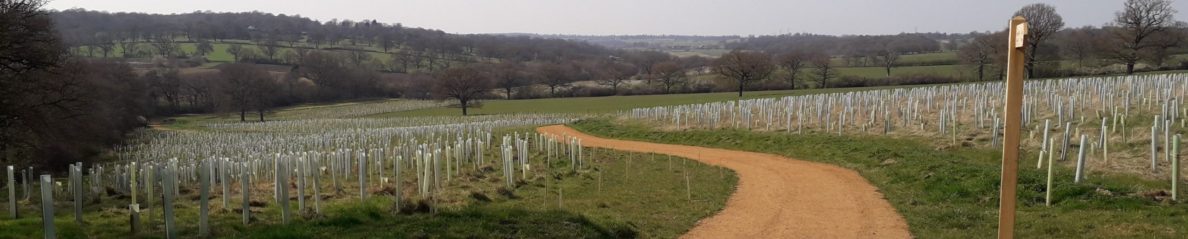
Many folk we meet across Enfield Chase are fascinated by the large tree planting areas and usually the first question is “What varieties of trees have you planted here”

A very useful leaflet was given out to many of the walkers at our inaugural walk but in case you did not receive one we have shown the project overview here.

The restoration of Enfield Chase was led by Enfield Council with the aim of creating a publicly accessible sustainable broad-leaf woodland

This will provide natural flood prevention, benefit wildlife (as can already be seen) and having the added advantage of improving access within the greenbelt of London

There are 100% native UK species and we have planted to date over 100,000 trees covering over 60 hectares.

Volunteers like ‘Friendsofenfieldchase.org.uk’ were instrumental in this well co-ordinated and well planned planting.

We must thank Enfield Council, The Forestry Commission, Thames 21, Mayor of London and Climate Action Enfield for all their forethought, cooperation and dedication to what will become a marvellous heritage for future generations.

The new grant (see the information here on our website) will enable more planting and to attend to some of the failures caused by the drought. As “Friendsofenfieldchase.org.uk” we welcome people of all ages to join us. There is always a lot of fascinating schedules planned and commitment can be very basic but everyone is promised a great deal of fresh air, bonhomie, muddy shoes…and lots of smiles…with the bonus of contributing to a green future for future generations.

Here is a brief description of 16 varieties planted plus a note at the end of a further 15 varieties we have planted.

Illustrations of the species are by Anna Darley

PEDUNCULATE OAK
HAZEL
HORNBEAM
BEECH
ASPEN
COMMON ALDER
WILD CHERRY
SILVER BIRCH
HAWTHORN
SCOTS PINE
BLACKTHORN
SLOE GIN

DOGWOOD
BLACK POPLAR
CRAB APPLE
GOAT WILLOW
HOLLY
Some of the other tree species we have helped in planting in The Enfield Chase include:

Small leaved lime

Sycamore

Norway Spruce

Red Alder

Grey Alder

Wych Elm

Downy Birch

Elder

Spindle

Buckthorn

White Willow

Crack Willow

Grey Sallow

Gelder Rose

Osier

This information is intended as a guide, and we do hope it adds to your enjoyment of the Enfield Chase.

Do join us in maintaining a wonderful new woodland and beautiful countryside for all to enjoy
THORNY SHRUBS / COPPICING & FOOD PRODUCTION FACTS

Thorns and holly were considered so important to the regeneration of trees that in 1768 a statute was established imposing three months forced labour on anyone found damaging them starting each month with a number of lashes of the whip.

Because scrub is habitat on the move. It is difficult to define and has, for centuries, been regarded as an enemy. However, tolerance towards thorny scrub actually protect whips and obviates the use of carbon-intensive polypropylene cylinders attached to wooden stakes with plastic ties..a financial and environmental cost and heavily labour intensive.

It has been noted that most tree guards are not exposed to enough sunlight to degrade.

Officers from the Woodland Trust demonstrated at Knepp that thorny shrubs provide the best protection and growing environment for saplings….as well as the variety of species spontaneously establishing themselves-including wild service and crab apples.

Maybe it should be noted that charities rely on grant aid to plant woodland.

Coppicing

Coppicing, where trees were regularly felled to near ground level allow shoots known as ‘spring wood’ regrow from the stump was traditionally used for tracks and for fuel for the iron industry and also has the added benefit of prolonging the trees’ life.

Interestingly, a lime still regularly coppiced is thought to be thousands of years old.

Mixed coppice is the most biodiverse and coppicing intervals vary according to species but many trees may have been coppiced seventy or more times in their history.

Increased food production facts

The notion that every inch of our land must be worked for our survival is highly emotive:

The prediction of world population increase is from 7 billion currently to 10 billion by 2050. 

The required increase in global food production is said to be 70-100%.

Vested interests do not show farmers being forced out of business by low commodity prices resulting from subsidies and overproduction.

The reality is that the world already produces enough to feed 10 billion people and one third (1.3 billion tonnes) is wasted annually

According to the UN Food and Agricultural Organisation industrialised nations annually waste 670 million tons of perfectly edible food.

As a local example, even Tesco admits to have thrown away 50,000 tons from their UK stores.. Multiply that up globally.

Restaurants routinely waste food by over ordering and us, the public,

demand ‘perfect’ food….straight carrots, blemish-free apples etc and then in rich countries we throw away 222 million tonnes annually.

We overbuy and are not taught how to cook leftovers, 

A startling statistic is that in the UK, 15 million tonnes of food was wasted in 2013 of which 7 million tonnes was wasted by households.

Bear in mind the epidemic of obesity and associated illnesses.

Food losses in developing countries are also far too high but are caused by poor distribution infrastructure, lack of refrigeration, communication, transportation and hunger rather than obesity which is the overriding problem here.

The food and farming industry is reluctant to resolve the issue of waste for commercial reasons

40% of US maize is used to feed cars

It is estimated that by 2021 14% of world’s maize, 16% of its vegetable oil and 34% of its sugar cane will be burned as fuel.

I am not being ironic when I say “food for thought”

Rewilding may not look always look attractive but maybe we should rethink our attitudes.

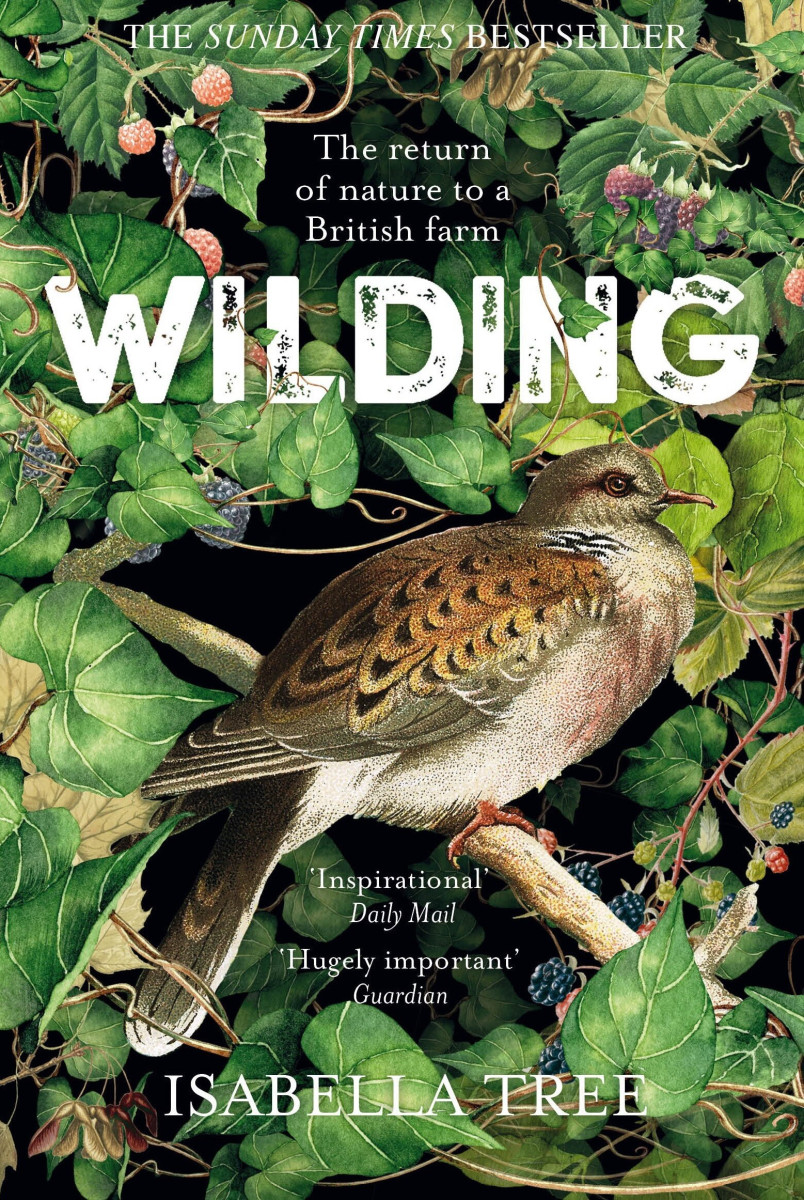
Much of this information is taken from ‘Wilding’ by Isabella Tree – The true story of the return of nature to a British farm.

Wilding-Isabella-Tree

Image 1 of 1

A Short History of Enfield Chase

Many folk are fascinated by the large swathes of delightful countryside so close to the metropolis and are keen to know its origins so here is a ‘very’ potted background which we hope you will find interesting. It is gleaned from many sources and apologies if you spot any mistakes.

A short history of Enfield Chase

A ‘Chase’ is a type of royal hunting forest and Enfield Chase is the only chase in London and the South East. Even in The Domesday Book in 1086 there is a rare reference to Enfield as a ‘park’ which was then the term for a game enclosure.

In 1676 it was noted that over the previous 700 years Enfield Chase had no inhabitants or habitations (other than three hunting lodges). It was greatly favoured as a royal hunting forest owned by the royal Duchy of Lancaster. Royalty seemed to have spent much of their time in hunting

Before 1777 the only road through the Chase was Enfield Road (Then called Merryhills Lane)  Stebbyngs Brook (as Salmon’s Brook was called in Tudor times), was apparently crossed by an unsafe bridge and the whole area was a quagmire in winter. The area by the Merryhills Pub is still known as Frog’s Bottom.

A fascinating discovery at Elsyng Palace

Elsyng Palace, nowadays, frequently shows itself. This is due to the hard excavation work done by volunteers of The Enfield Archaeological Society every year as they uncover more and more of the foundations of this former large palace close to Forty Hall. They then have to re-cover their excavations after their work.  

Hard work uncovering some fascinating history
An artists impression of how Elsyng Palace might have looked

Elsyng Palace was demolished in 1656, but the fishponds remain and are still a popular fishing spot. 

One of the attractive fishponds at Forty Hall

Henry VIII bought Elsyng Palace (which was expanded from a fifteenth century manor house) for its easy access to the hunting in Enfield Chase.

An historic survey showed that the southgate of the chase is where Southgate tube station is now situated.

Bunker’s Corner in the 1880’s. The wheelwright’s premises were demolished in 1897 to make room for some new shops but is now the site of Southgate Underground Station
The Site of Southgate Underground Station

After the division of The Chase in 1777 development initially was very limited with small-scale encroachment at Southgate and other settlements on the periphery.

A fascination look at the past…(in 1930)

Highlands Village was constructed on the sites of Highlands and South Lodge Hospitals which were on adjoining sites and prior to that Highlands Hospital was The Northern Isolation Hospital for tuberculosis.

Highlands Hospital

In the 1930’s the Piccadilly line was opened with large scale suburban development taking place at Oakwood (formerly known as Enfield West) and Southgate and Cockfosters

In 1936/7 Middlesex County Council purchased around 4000 acres for inclusion in the Enfield Green Belt just in time to save the remnants of the Enfield Chase. This is now admirably protected by law and residents alike, and The Enfield Society. However it is under constant pressure for development

Further Reading: see the full digitalised eition of David Pam’s book: The Story of Enfield Chase, published by The Enfield Preservation Society in 1968 (Hard copies still available on line)

The whole scheme has much wider implications than is shown here. Hopefully this background will encourage readers to enjoy the beauty of the Enfield Chase and not allow any future inroads into this wonderful area. By enjoying it and preserving it we provide a wonderful legacy for future generations.