
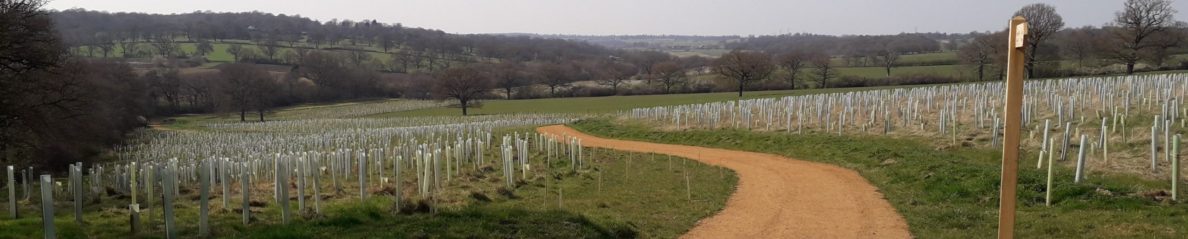
A Short History of Enfield Chase
Many folk are fascinated by the large swathes of delightful countryside so close to the metropolis and are keen to know its origins so here is a ‘very’ potted background which we hope you will find interesting. It is gleaned from many sources and apologies if you spot any mistakes.
A short history of Enfield Chase
A ‘Chase’ is a type of royal hunting forest and Enfield Chase is the only chase in London and the South East. Even in The Domesday Book in 1086 there is a rare reference to Enfield as a ‘park’ which was then the term for a game enclosure.
In 1676 it was noted that over the previous 700 years Enfield Chase had no inhabitants or habitations (other than three hunting lodges). It was greatly favoured as a royal hunting forest owned by the royal Duchy of Lancaster. Royalty seemed to have spent much of their time in hunting
Before 1777 the only road through the Chase was Enfield Road (Then called Merryhills Lane) Stebbyngs Brook (as Salmon’s Brook was called in Tudor times), was apparently crossed by an unsafe bridge and the whole area was a quagmire in winter. The area by the Merryhills Pub is still known as Frog’s Bottom.

Elsyng Palace, nowadays, frequently shows itself. This is due to the hard excavation work done by volunteers of The Enfield Archaeological Society every year as they uncover more and more of the foundations of this former large palace close to Forty Hall. They then have to re-cover their excavations after their work.


Elsyng Palace was demolished in 1656, but the fishponds remain and are still a popular fishing spot.

Henry VIII bought Elsyng Palace (which was expanded from a fifteenth century manor house) for its easy access to the hunting in Enfield Chase.
An historic survey showed that the southgate of the chase is where Southgate tube station is now situated.


After the division of The Chase in 1777 development initially was very limited with small-scale encroachment at Southgate and other settlements on the periphery.

Highlands Village was constructed on the sites of Highlands and South Lodge Hospitals which were on adjoining sites and prior to that Highlands Hospital was The Northern Isolation Hospital for tuberculosis.

In the 1930’s the Piccadilly line was opened with large scale suburban development taking place at Oakwood (formerly known as Enfield West) and Southgate and Cockfosters
In 1936/7 Middlesex County Council purchased around 4000 acres for inclusion in the Enfield Green Belt just in time to save the remnants of the Enfield Chase. This is now admirably protected by law and residents alike, and The Enfield Society. However it is under constant pressure for development
Further Reading: see the full digitalised eition of David Pam’s book: The Story of Enfield Chase, published by The Enfield Preservation Society in 1968 (Hard copies still available on line)
The whole scheme has much wider implications than is shown here. Hopefully this background will encourage readers to enjoy the beauty of the Enfield Chase and not allow any future inroads into this wonderful area. By enjoying it and preserving it we provide a wonderful legacy for future generations.